In this well-constructed narrative, Ambler reveals a hidden Yellowstone, a place where delight and danger are separated by the slimmest of margins: a degree of pitch on an avalanche slope, a few inches of a buffalo’s horn, a moment during a deadly wildfire. With insight, love, and humor, Yellowstone Has Teeth paints a never-before-seen portrait of an iconic American landscape and the people who live there.
The Deadly Art of Love and Murder amazon.com/Deadly-Art-Love-Murder-Caribou/dp/1946063371/ Alaskan fine arts dealer, Caribou King, has closed up shop for the season. When she discovers the body of Mrs. Nash, an elderly woman, in the old Tilamu house, Cara can’t help poking her nose into the investigation. With the Alaskan winter closing in, Cara finds herself caught between two men who say they love her and one who wants her dead.
Along the Sylvan Trail amazon.com/Along-Sylvan-Trail-Julianne-Couch/dp/1944986227/ In Sylvan Grove, Iowa, you can eat at Sally's Sylvan Diner, shop at a family business in the square, read your news in the Sylvan Grove Gossiper, spend the night at the Sylvan Inn, and live out your final days at the Sylvan Valley Care Center. But if you are budding plant scientist Amber Jensen, Sylvan Grove is your touchstone, the place to heal a broken heart and start a new life restoring an historic bar in the foothills of Wyoming's Wind River Mountains.
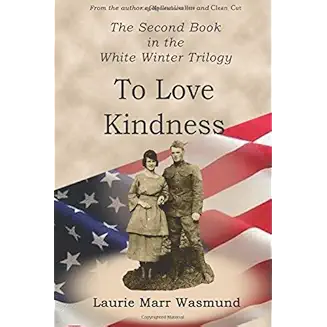
To Love Kindness amazon.com/Love-Kindness-White-Winter-Trilogy/dp/0985967552/ 1918 At a time when it takes courage to love, hope, or have faith, three young Irish-American dare to believe in themselves and in America. Meticulously researched, this second book in the White Winter Trilogy explores how hope is shattered and rekindled, hearts are broken and mended, and faith is lost and found in a world in which nothing is certain. Náápiikoan Winter amazon.com/Naapiikoan-Winter-Alethea-Williams/dp/1532710569/ At the turn of a new century, changes unimagined are about to unfold. When white traders approach the Piikáni for the first time, no one can reckon the price that will be paid. Naapiikoan Winter is a Will Rogers Medallion Awards bronze level winner.
USA Today Bestselling Author Shanna Hatfield joins us with her latest release, a sweet World War II romance.
Can forbidden love blossom
amid the constraints of war?
The moment the Japanese bombed Pearl Harbor, life shifted for Miko Nishimura. Desperate to reach the Portland Assembly Center for Japanese-Americans, she’s kicked off the bus miles from town. Every tick of the clock pushes her closer to becoming a fugitive in the land of her birth. Exhausted, she stumbles to her grandparents’ abandoned farm only to find a dying soldier sprawled across the step. Unable to leave him, she forsakes all else to keep him alive.
After crashing his plane in the Battle of the Atlantic, the doctors condemn Captain Rock Laroux to die. Determined to meet his maker beneath a blue sky at his family home, he sneaks out of the hospital. Weary and half out of his mind, he makes it as far as a produce stand he remembers from his youth. Rather than surrender to death, Rock fights a battle of the heart as he falls in love with the beautiful Japanese woman who saves his life.
A poignant, sweet romance, Garden of Her Heart proves love can bloom in unlikely places even under the most challenging circumstances.
Dazed and drained, Miko came to her senses as she reached a road she recognized in the predawn light. It led to a farm owned by one of her grandparents’ neighbors. If she cut through their pasture, it would save her a few miles of walking.
She pushed down the wires of the fence and stepped over it, then reached back for her suitcase. The barbed wire caught her coat. Miko jerked it away from the snag and rolled her eyes in frustration when the fabric ripped.
Sudden anger, at herself for her own arrogance and stupidity as well as the circumstances that left her walking through the woods in the rain at night, fueled her steps. Indignation lent her spent body strength as she hurried across the pasture. A few cows tossed uninterested glances her direction, but none moved her way.
Relieved when she reached the far end of the pasture, she hurried over the fence and along the edge of the trees that circled the vast acres her grandparents owned.
The first fingers of dawn stretched across the drab sky as she stepped from the trees and swallowed back a sob at the sight of her grandparents’ produce stand. As long as Miko could remember, her family had sold produce from the red-painted structure filled with shelves and bins to hold every type of vegetable and fruit the fertile soil would grow.
A hundred yards behind the produce stand, a white picket fence surrounded the cheery yellow bungalow home her grandparents had built in the mid-1920s. With a wide porch and a plethora of flowers surrounding all four sides, the house appeared welcoming. Beyond the yard, a barn and large storage building, along with a collection of outbuildings, alluded to a prosperous farm.
With a prayer to find her family waiting inside for her, she raced up the front steps of the porch and tried the door. The knob rattled but didn’t turn, locked from the inside. Miko set down her suitcase and rushed around to the back door. In her haste, she tripped over the body of a man as he sprawled across the back step.
Unconscious, the uniformed soldier shuddered against the chill in the air, his clothes every bit as wet as hers. At least his jerky tremors assured her he wasn’t dead.
Panicked, she pounded on the door. “It’s Miko! Open the door! Please!” Fist banging against the wood, she called out to her grandparents, willing them to be there.
All remained eerily silent in the house. Single-minded in her efforts to enter the dwelling, Miko stepped over the man and lifted a brick from the border edging the flowerbed. With a spare key in her hand, she jammed it in the lock and pushed the door open, rushing inside.
USA Today Bestselling Author Shanna Hatfield writes character-driven romances with relatable heroes and heroines. Her historical westerns have been described as “reminiscent of the era captured by Bonanza and The Virginian” while her contemporary works have been called “laugh-out-loud funny, and a little heart-pumping sexy without being explicit in any way.”
Convinced everyone deserves a happy ending, this hopeless romantic is out to make it happen, one story at a time. When she isn’t writing or indulging in chocolate (dark and decadent, please), Shanna hangs out with her husband, lovingly known as Captain Cavedweller.
In sofar as the
taking of captives and reducing them to slaves was concerned the Apache
acquired this custom from the Spaniard or Mexican, and it is safe to say that
during the period of which I write there was not a settlement in the valley of
the Rio Grande that did not number among the inhabitants a large number of
Apache and Navajo Indian slaves.
—Ralph Emerson Twitchell, The Leading Facts of New Mexican History, Torch Press, 1917
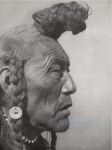
Photo of a
Blackfoot by Edward Curtis, with a hairstyle described in Naapiikoan Winter as
one worn by the character Saahkómaapi (Young Man), Beaver Bundle Man to the
Inuk’sik band of the Piikáni, and the band’s Dreamer.
The primary female character in my
novel, Náápiikoan Winter, is abducted
as a child and later traded into slavery. She is abducted by Apaches, sold by
Utes, and enslaved by other tribes including the Piikáni. Was it true that
Native Americans learned this practice from contact with the Spaniards, as the
quotation that opens my book asserts?
Although it’s true Christopher
Columbus started an unholy tradition by enslaving over 500 Indians, an article
on the website Oxford Research
Encyclopedia: American History by Christina Snyder says, “The history of
American slavery began long before the first Africans arrived at Jamestown in
1619. Evidence from archaeology and oral tradition indicates that for hundreds,
perhaps thousands, of years prior, Native Americans had developed their own
forms of bondage.” Indians captured women and children to replace the up to 90%
of their people killed by war and diseases they had no defense against. In an
article for Slate, Rebecca Onion says
“Native types of enslavement were often about kinship, reproductive labor, and
diplomacy, rather than solely the extraction of agricultural or domestic labor.”
All Native tribes that I know of
were called “The People.” What this common nomenclature implies is that the
people of one’s tribe were People, and all others were something less. Captives
were outside society, but slaves were even further outside the social order. So
as a slave passed from tribe to tribe, my character Buffalo Stone Woman would
have had many instances of rejection and neglect. For most of her adult life,
she would not have been accepted by anyone as a true person, but a creature
somewhere on a level with a dog or other tamed animal.
There were ways to escape the
status of captive, enshrined in solemn ceremony, that could make of a mere
captive a real person by adoption or marriage. Slaves were of a different
nature, “distinguished by the extremity of their alienation from captors’
societies and the exploitation of their labor to enhance the social or material
life of the master,” according to Snyder. Slaves often had a lot of freedom to
come and go in the performance of their duties. And slavery wasn’t a hereditary
condition: children of Indian slaves were not themselves enslaved.
So in Náápiikoan Winter, when Buffalo Stone Woman finds a home at last
among the Piikáni at the base of the Rocky Mountains where although a slave she
has attained the status of a distant wife to the powerful Orator, she wants
never to have to leave this safe haven. She is tolerated, even accepted. She brings
to her new people her skills and her knowledge, which makes them, already
powerful, an even more potent force on the Plains.
A photo of a
woman wearing an elk tooth dress, a sign of high regard. Lucy Crooked
Nose - Cheyenne - 1898 - forums.powwows.com
In my new historical novel Náápiikoan Winter, the main female character is abducted as a child and spends about 30 years with various Indian tribes, before coming into contact with English traders of the Hudson’s Bay Company. One of my beta readers asked why, in all that time, Isobel didn’t just run away. And why doesn’t she reveal to the Englishmen that she is a captive?
In the years preceding European settlement, there were few white people in the West beyond trappers and traders. I relied on historical accounts to reveal that in the 18th Century, abducted children raised by Indians seldom made it back to their families.
In 1758, Mary Jemison was captured at age thirteen by a party of French and Indians. According to the website http://www.eyewitnesstohistory.com/, “[f]rom that day until her death 78 years later she never left the Indian culture,” although her story of life with the Seneca did see publication in 1824.
According to the Texas State Historical Association’s website, https://tshaonline.org/, “[t]he practice of captive-taking among North American Indians goes back to prehistoric times.” Often, captured children, especially boys, “became so completely assimilated that they resisted attempts to redeem them. White girls captured before the age of puberty usually became assimilated and married chiefs or warriors,” although, it goes on to state, girls past puberty “sometimes risked their lives to escape.” The website also provides the information that by the time of Indian settlement on reservations, “it is estimated that 30 percent of Apaches, Comanches, and Kiowas had captive blood in their veins.”
In a Wikipedia article on captive Herman Lehmann, it is said that his Apache captors “lied and told Lehmann they had killed his entire family, depriving him of any incentive to attempt escape.”
In a review by Scott Zesch of the book The Captured: A True Story of Abductions by Indians on the Texas Frontier on the website https://dariadoering.com, he states, “In fact the amazing thing is that of all the children held for over a year, they all came to much prefer the Indian way of life, and none of them willingly chose to return to their white families”. Later on, especially in the second half of the 19th Century, it became more common for Indians to release captives for ransom. Yet still, “Traumatic as it had been to be abducted, it was even more traumatic to be returned to their white families. They all had difficult adjustments, and retained many Indian characteristics for the rest of their lives.”
Olive
Oatman, 1857, Wikipedia
In 1851 Olive Oatman, 14 years old, and eight-year-old Mary Ann Oatman, were captured by Apaches, while their family was moving West. According to the book The Captivity of the Oatman Girls, the
enslaved sisters were marched 200 miles, but kept together as servants to the
Apache women. These “Touton” Apaches had apparently fled from beneath the iron
thumb of Catholic missionaries, and had contact with the Mojave Indians who lived
more than 300 miles to the northwest. The Oatman sisters were sold to the
Mojaves. The Indians themselves, according to Olive, ate worms and grasshoppers
and reptiles, but Mary Ann, forced to find enough to sustain herself, died of
starvation. Of the fifth year of her captivity, 1856, Olive is quoted as
saying, “I knew that there were white persons at Fort Yuma, but did not know my
distance from the place.” Their brother
Lorenzo, trying to discover some way to rescue them, says, “[M]en did not come
across the plains to hunt captives among the Indians,” meaning that there was
little interest among strangers, even soldiers, in dropping everything else to
try to save a couple of white girls. After much public agitating to the
authorities and the newspapers by Lorenzo, at last a Yuma Indian is dispatched
with a letter from Fort Yuma asking whether Olive wanted to be released or to
stay. Afraid to express her feelings one way or the other, Olive had to wait
for the Mojaves to decide her fate. Accompanied by a Mohave chief’s daughter to
obtain a horse for her release, Olive is finally let go. Olive spoke of the
Mojaves with affection, and was later to say that “they never offered the least
unchaste abuse to me".
So it is historically accurate to have my character, Isobel, never attempt to run away. Isobel was captured as a child and spent ten years among the Apache, viewed herself as Apache and then was captured again by a different tribe, traded and traded again all the way up the eastern side of the Rocky Mountains, and spent a further 20 years among those various tribes. When she finally meets up with the English traders, Isobel not only has little memory of her early life on a New Mexico hacienda, she wouldn’t have considered the Europeans in any way her natural allies. Isobel didn’t run away because there was nowhere for her to possibly run, and because after 30 years with the Indians, she didn’t had no desire to run anywhere else.
Does my reasoning make sense to you as a reader? What do you think about Isobel never trying to escape her captivity? Does it make a difference if you think about what avenues of travel there are today, and those available to a female child or woman in about the year 1795?